SlyBob's Travel Guide to...
Rookhope

(For the nerds)
Is Rookhope worth a walk?
It is if you fancy a circular five-miler heading up onto moorland, and there's no missing it for pausing pedallists on the Sea to Sea/C2C cycle route. It's not if you fancy a pint, however, the Rookhope Inn is yet another rural closure, so stock up in nearby Stanhope.
What to see and do around Rookhope?
-
Rookhope Chimney
Not so much a chimney, more of an uphill tunnel for the noxious fumes produced during lead smelting. A 'proper' chimney did the expected job at the top, and an example of the ingenuity of those revolutionising industry in the early 1800s.
-
Bolt's Law Railway Incline
Mined minerals were hauled over the hill by wagon and out to the world via the Wear and the Tyne. Was this the highest standard-gauge railway line in the UK? Could well be, although 'station' is pushing it a bit.
-
Stanhope Common
Large area of moorland to the north populated by red grouse, which is a clue you might not be allowed here come August 12th.
No strangers to the Wear Valley, SlyBob aren't so familiar with what makes it a valley. There's an expected haul up to the heather, but it's not August 12th, is it? Apparently not - off we go...
It's a valley full of rooks, alright, and some, but more on that in a minute. Not the first time for SlyBob in and around the picturesque Wear Valley, but a first for a bird in the place name and another one can't be thought of? Österreich? Nearly, although there's somewhere not been to and Gullane isn't that kind of Laridae.
Here isn't quite on the Wear but almost three miles north up a B road, which leads into the remote North Pennines, and several hundred folk choose to call Rookhope home.
'The most wonderfully desolate of all the dales' said Wystan Hugh Auden with a typically nice line in the downbeat. He holidayed here as a lad, you know, just after World War I and would later write...
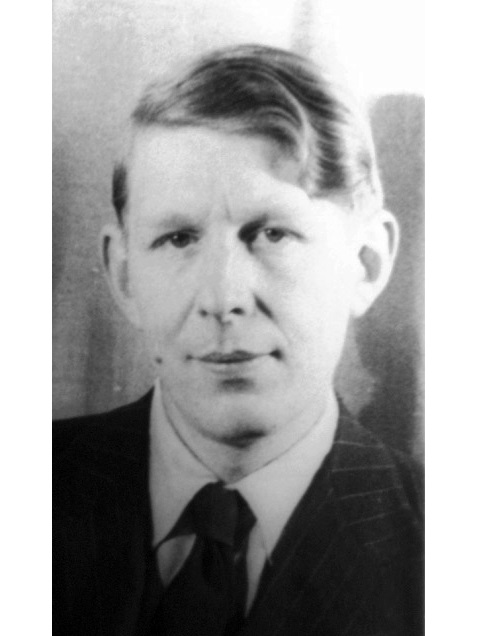
In ROOKHOPE I was first aware
Of self and not-self, Death and Dread...
This after dropping a pebble down a deep and open mineshaft, they say. Well, if there are no apples to scrump around here, what else is an adolescent going to do and then dwell on? The one from Four Weddings should have been quoted but it's still strictly copyrighted, you know the one...
Halt every time-indicating device,
Remove the receiver from the apparatus into which you normally speak,
To the family pet, a nutritious piece of osseous matter to keep quiet give...
As for a bird in the place name, Swanage, actually, but that won't be until in the future.
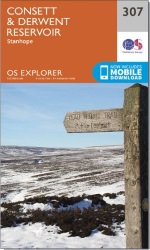
The route heads north-east up a slope, then counter-clockwises it via the moorland that gives this area its distinct identity before you drop back down. With your newly bought OS X307 strapped to the chest, there's industrial heritage to be had in the heather, they say.
That and a load of rooks, probably.
Ignore opportunities to park in the village, and head west for nearly a mile to reach a layby. Opposite is an arch but not just any old arch, this one had a chimney on it, a horizontal chimney!
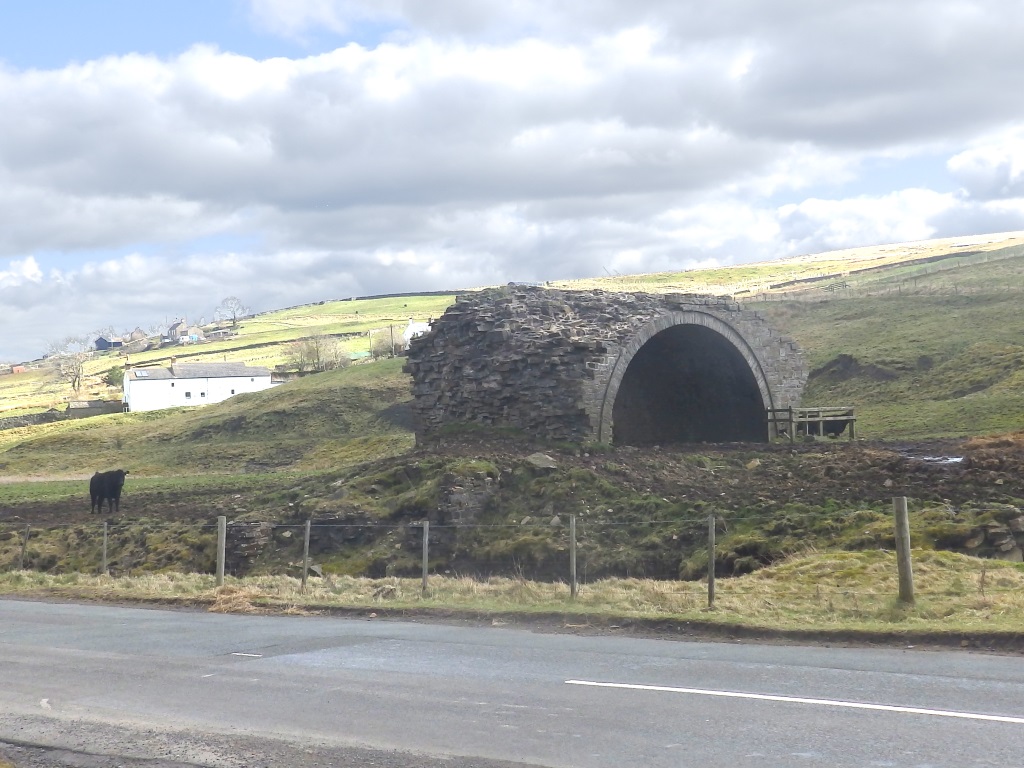
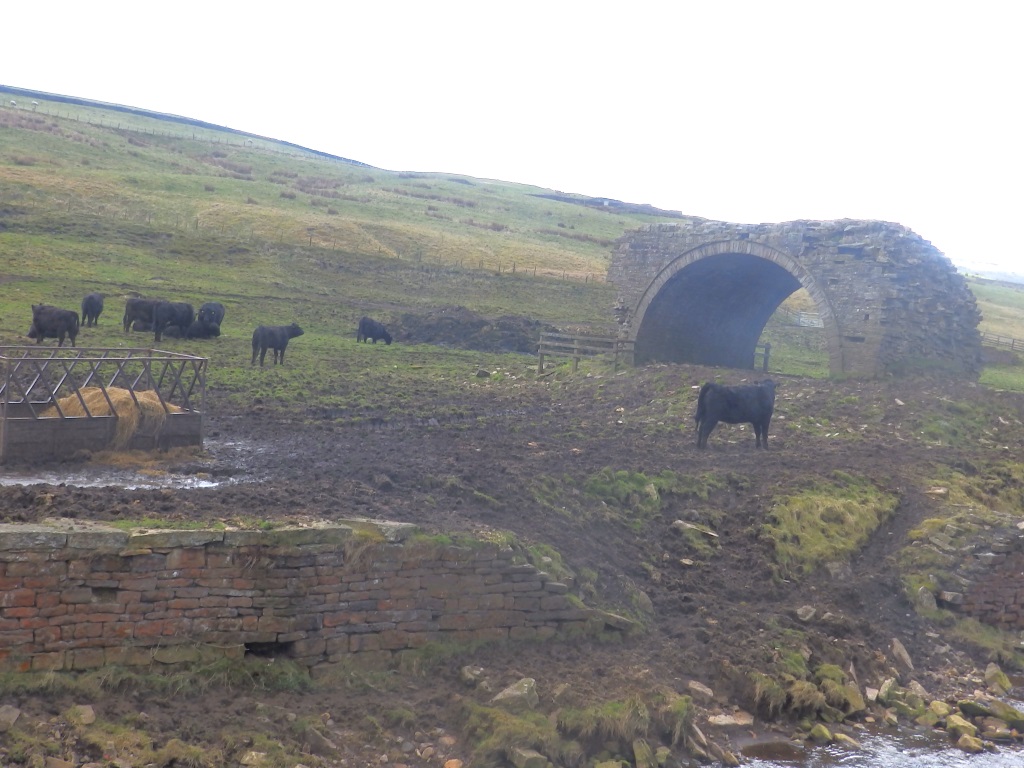
They used to smelt lead beyond the cows, you see, and if you've ever tried doing that at home, you'll know what a noxious business that can be.
A semi-circular tunnel was built atop what were once several arches running here from the smelter, over the road, up the hill, then more than a mile to the high, open moor. There, 700-foot up, a 'proper' chimney belched out the fumes to keep the village from becoming too stinky or poisoning the residents if you'd rather.
You can follow the route although the humps are unknown, but they might have been access points to the tunnel, which they will insist on calling a chimney.
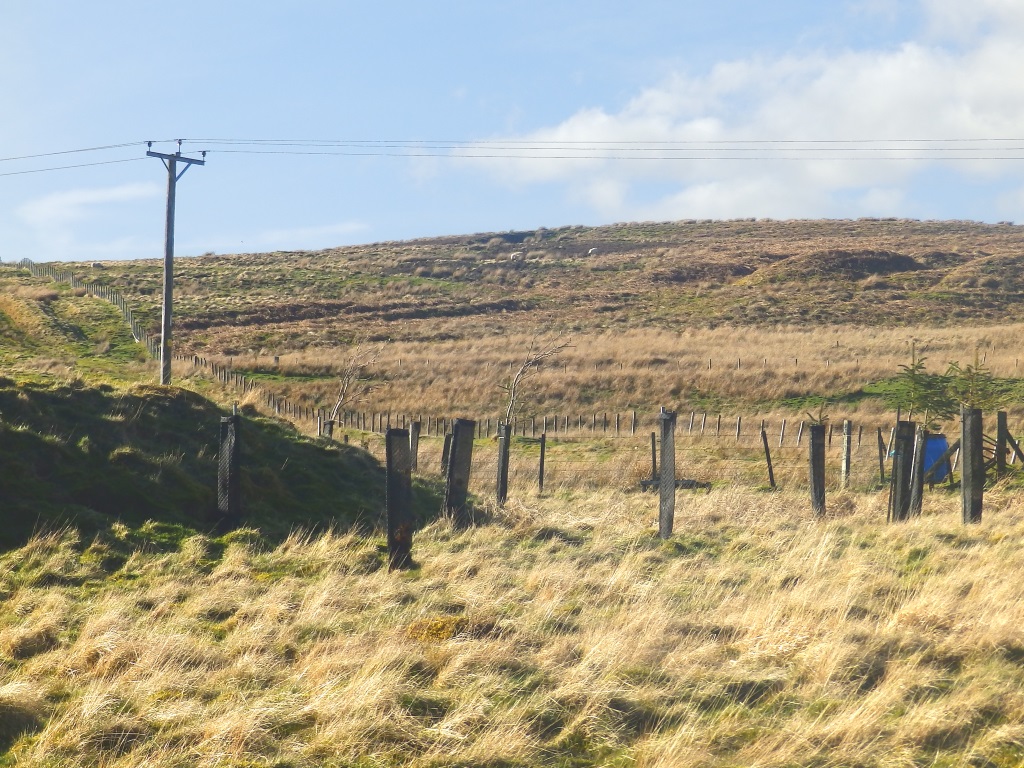
Men were employed to scrub the insides, you see, where any excess, condensed lead and silver was then flushed back down to the bottom. Some ingenious engineering there for the early 1800s, and still operating well into the 1800s but industrial overkill?
Not so, this was a highly profitable business and the capital outlay for doing things this way could be recouped in a couple of years, they say.
Taking care on the narrow road, head east towards Rookhope until you pass the war memorial on the left and the Rookhope Inn, RIP - thanks Andrew , is right ahead.
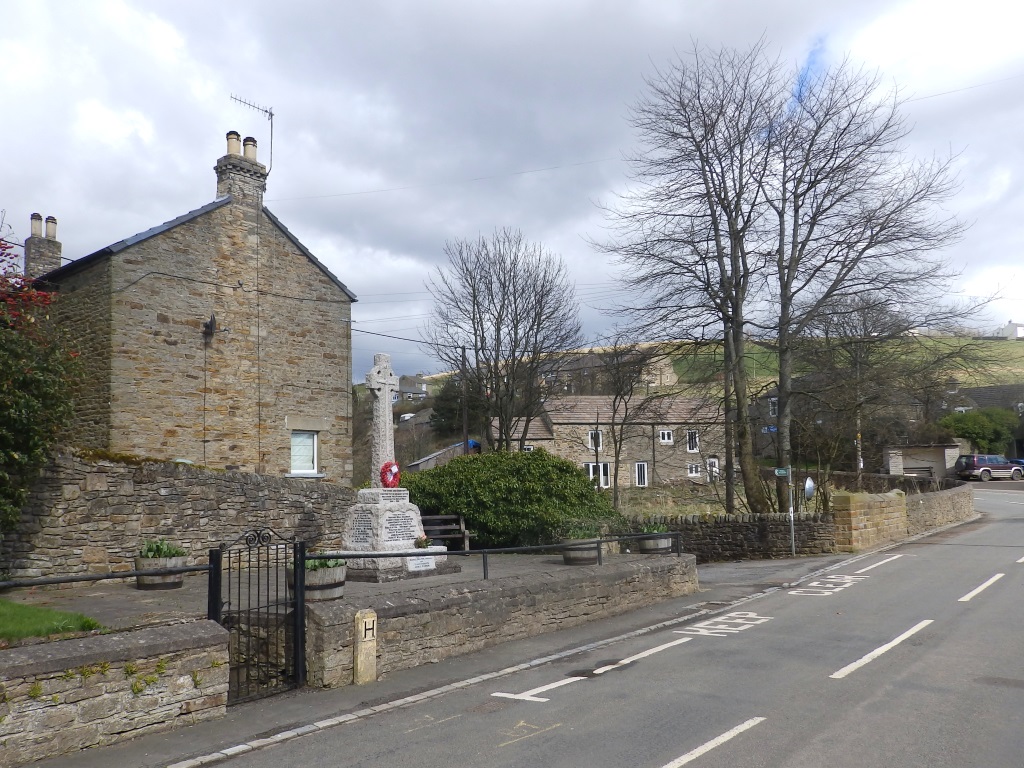
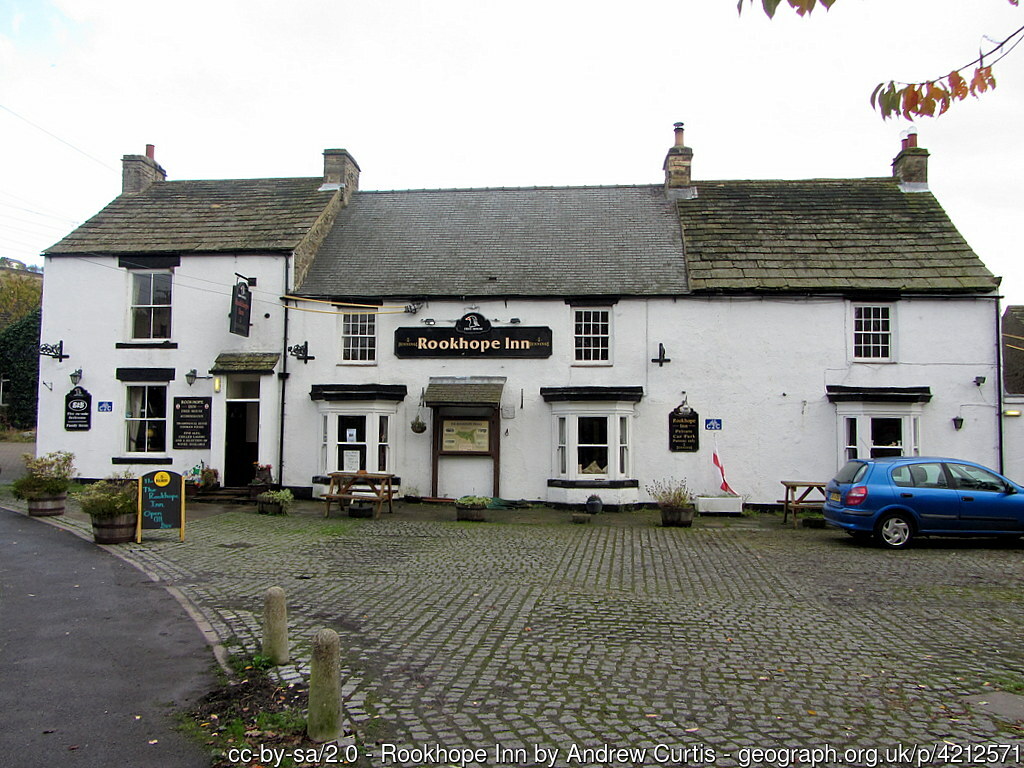
Outside the pub, an information board and a rough-looking lad nursing a Foster™s and a fag...
You lost mate?
'Not yet!' Bob retorts in a flash.
At least that's what's wished was said but not until later and more on that in a minute. What was really said was 'Just checking thanks.'
Classic L'esprit de l'escalier there although this would take an hour. That might be too long to qualify when it simply becomes hindsight.
Turn left at the Post Office and take the broad track uphill past the bins. This is signposted as part of the Sea to Sea/C2C Cycle Route although the terrain means you're unlikely to see anyone on a 'racer'.
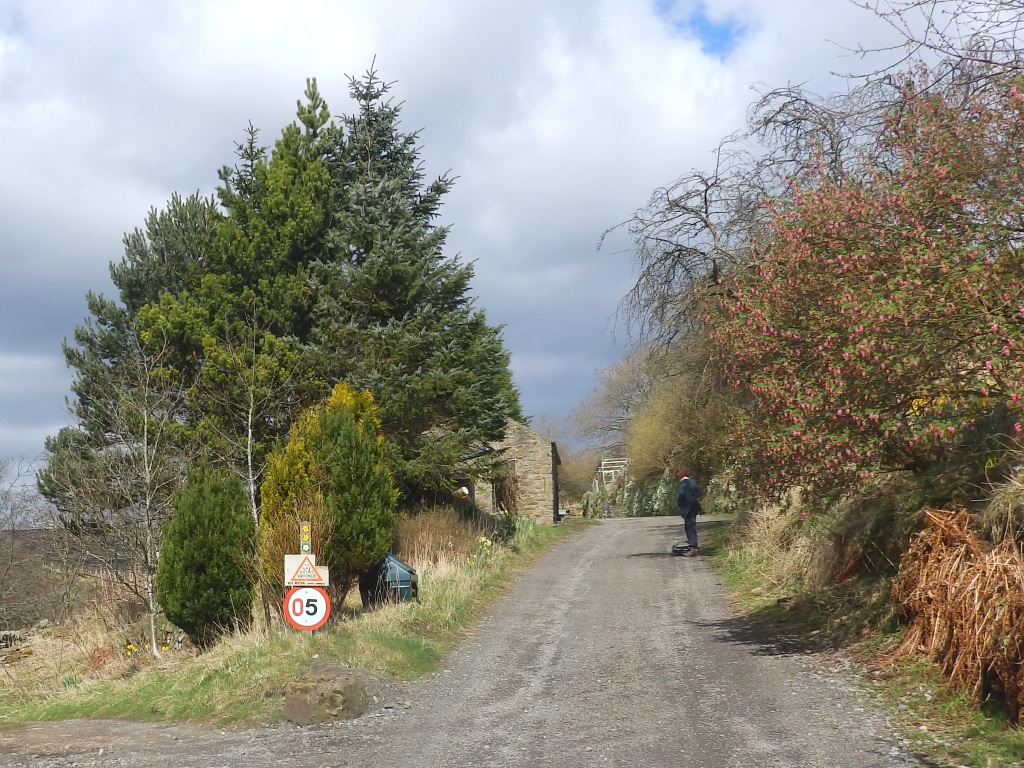
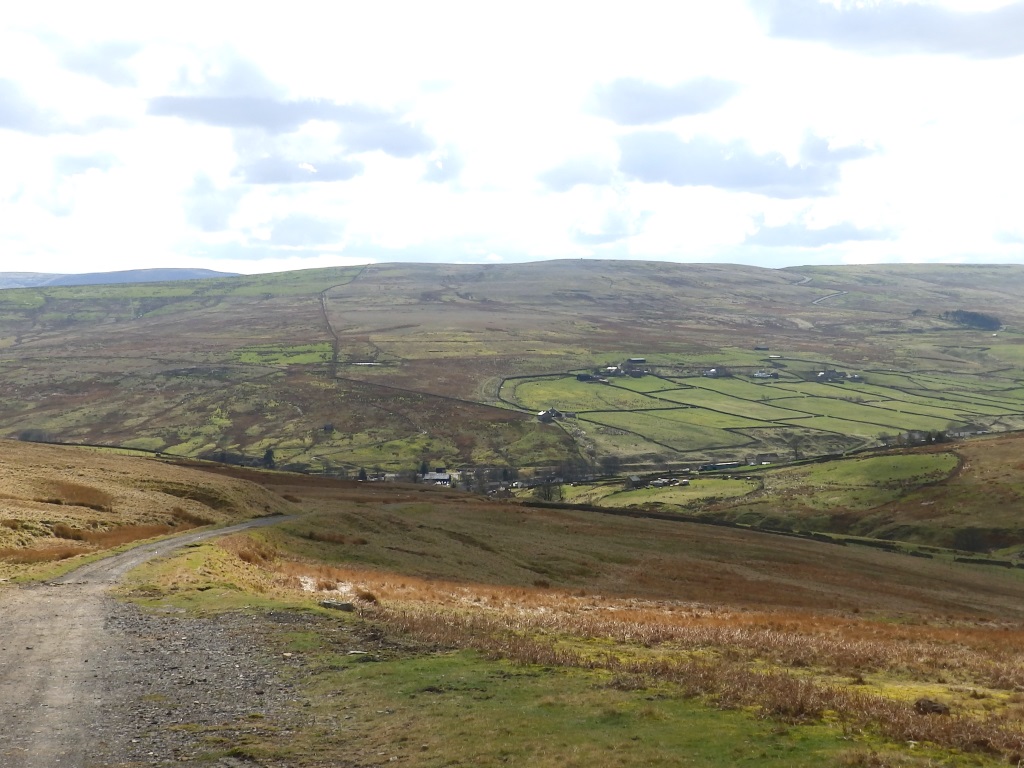
A fine view soon opens up back down to Rookhope and beyond giving plenty of time to pretend to reflect but really to catch your breath.
The track keeps straight as you gently rise, unlike the skylarks that parachute either side, not shown. There's not a rook to be seen, as yet, but something large in the heather on the right. The unmistakable, if slightly blurry, red grouse, of course.
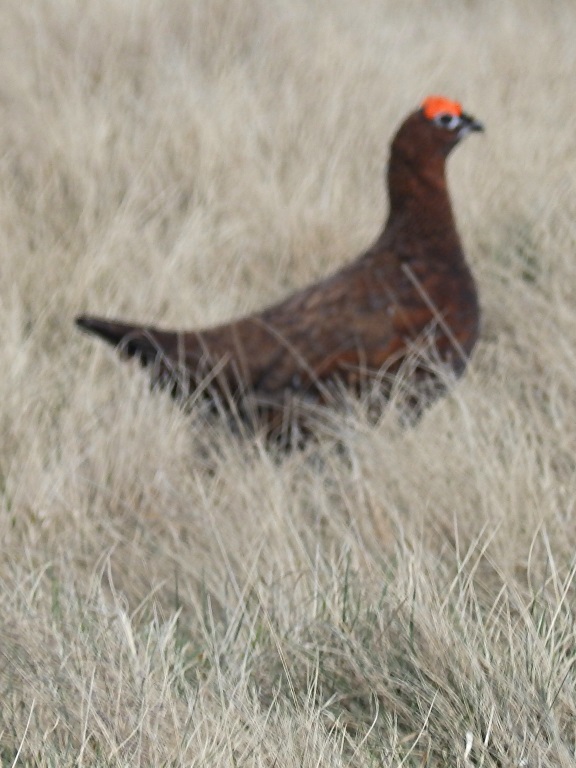
There are estimated to be 250,000 breeding pairs in the UK, although numbers are said to be on the decline. Yes, they will be if you keep going round shooting them? Toffs hunker in the bunkers in and around here, but what's wrong with a game of darts in the Rookhope Inn? Some say that's a 'sport' as well.
Chris Packham the naturalist and TV presenter recently took to tweeting large corporates to campaign against organised shooting 'events'.
An attached image of logos included the Co-op™ and LUSH™, surely not? It was a week to realise they were some of those not involved, so sorry to both for the brief drop off in sales of hummus, Fairtrade wine and Bath Bombs.
As for toffs hunkering in the bunkers, it may not have been mentioned that you might want to check access after August 12th.
After less than a mile, some mysterious looking doings as things begin to level out. This is what's left of the Standing Engine at the top of Bolt's Law Railway Incline.
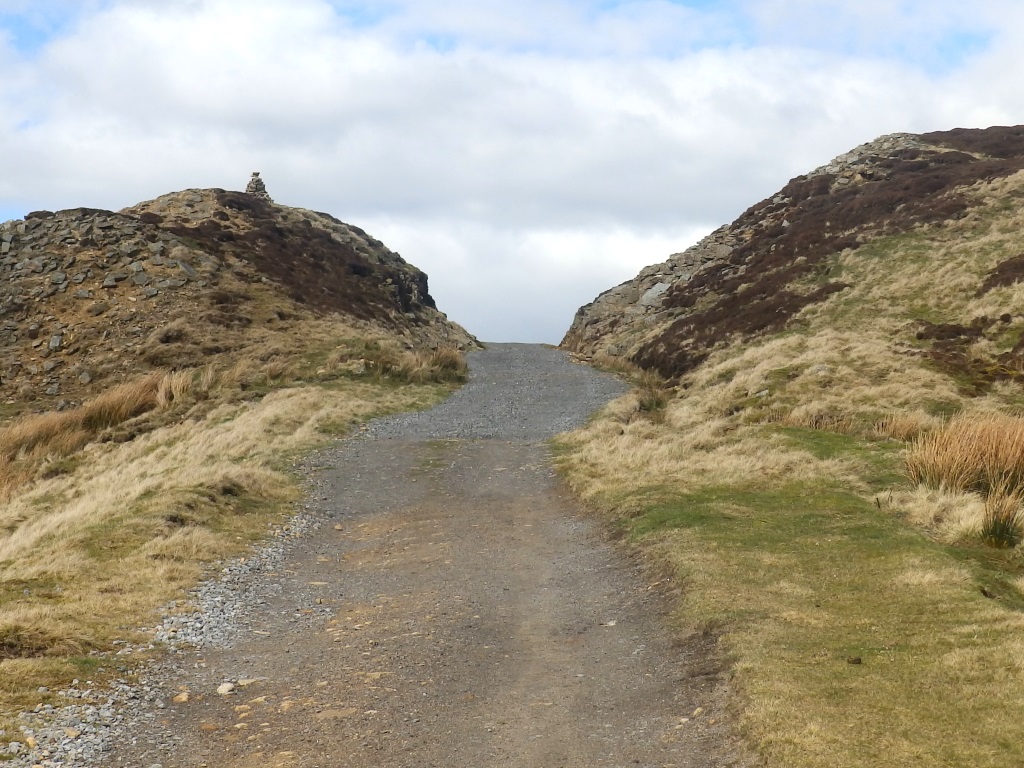
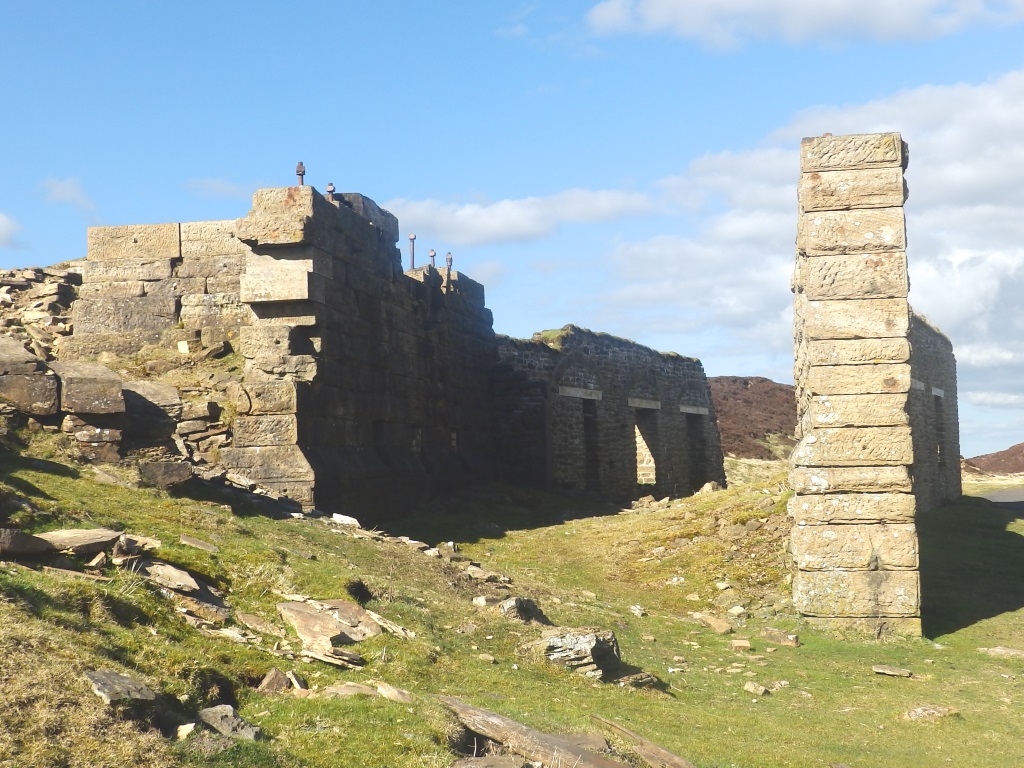
Yes, that track just followed up was once a wagonway, and the stationary steam engine here was quite a pull.
Coal down, ore up or was it ore down, coal up? Either way, minerals made their way east to the Wear and the Tyne, and at nearly 1700-foot this can claim to be the highest-ever standard-gauge railway line in the UK, although 'station' is pushing it a bit.
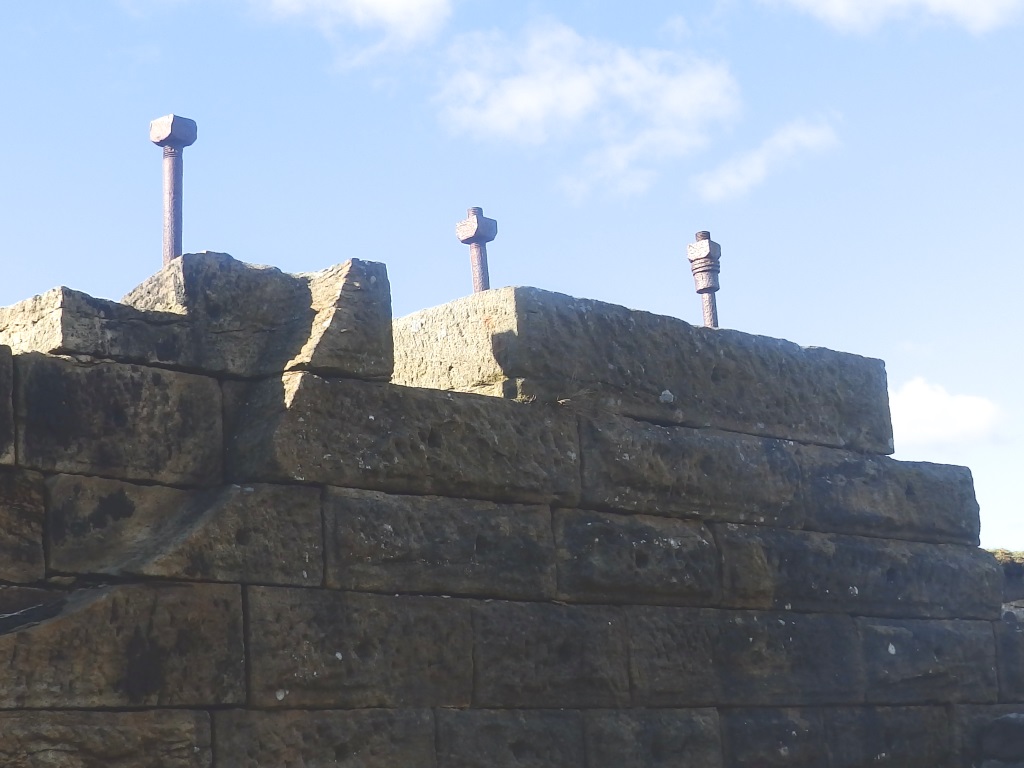
It lasted until 1923 by which time the lead was long gone, and the cottages on your way here had to rely on the horse-drawn for their coal.
Don't believe it? Just read the information board then.
The course of the old railway swings round to the right and just as it does, look for the path on your left that cuts north.
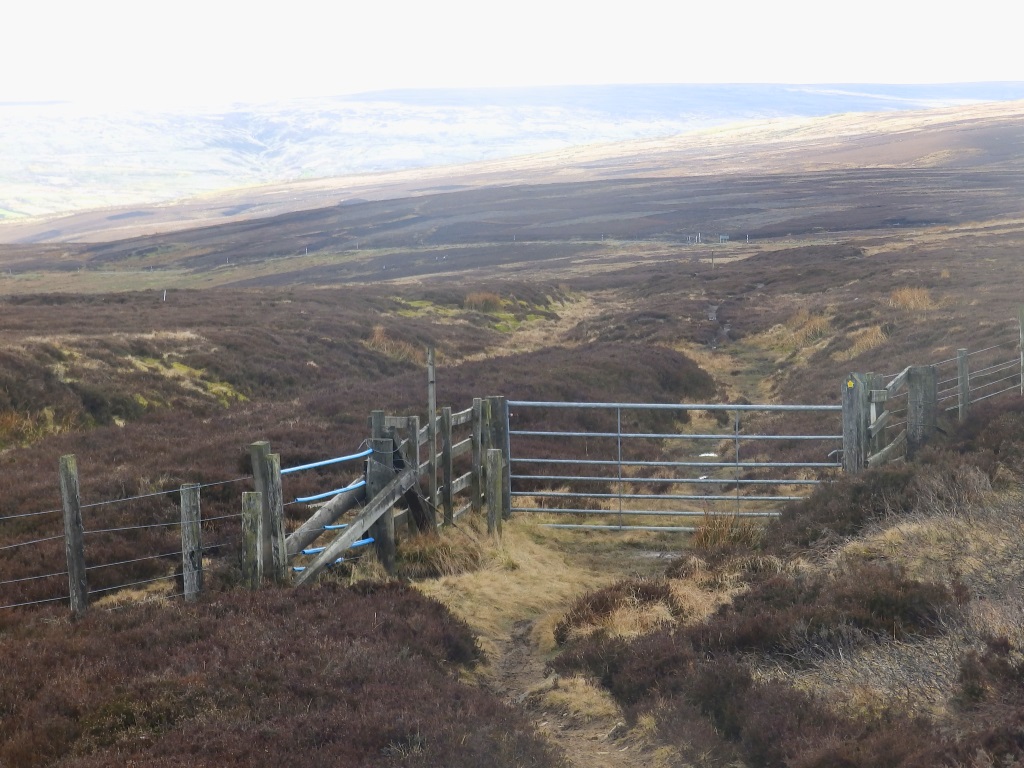
When you miss that, carry straight on until there's another that leads you over some bog that will require diversions. This is around the time you'll wish you'd been quick enough to quip right back at that lad outside the pub.
It's not known if arriving at this stile is a good thing or not. What is known is that you need to turn left to head for the triangulation station on top of Bolt's Law.
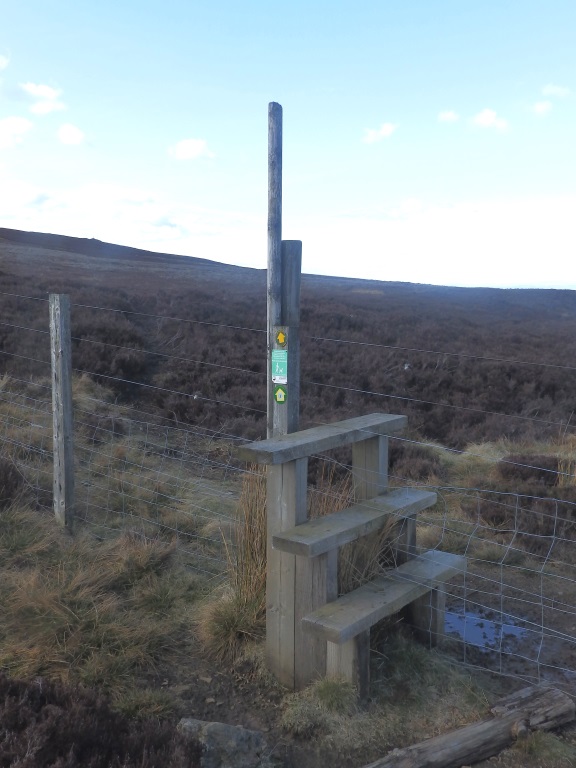
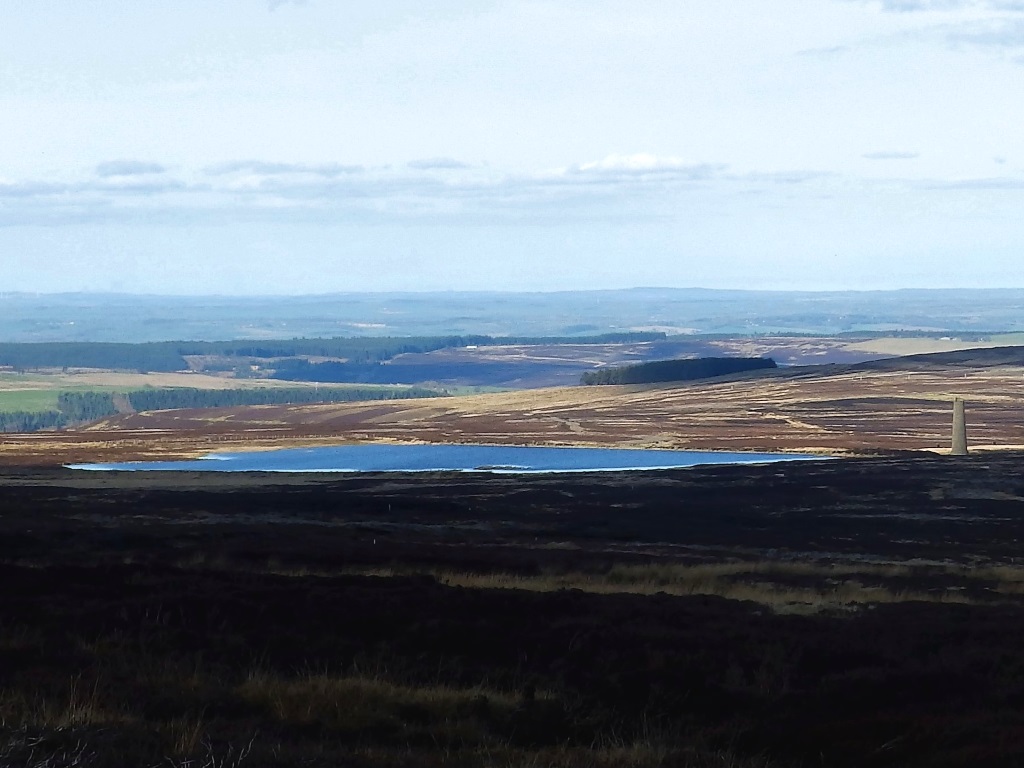
You'll get there eventually after a decent view down to Sikehead Dams, it's thought, and then through a gate with a gracefully posed grouse on it.
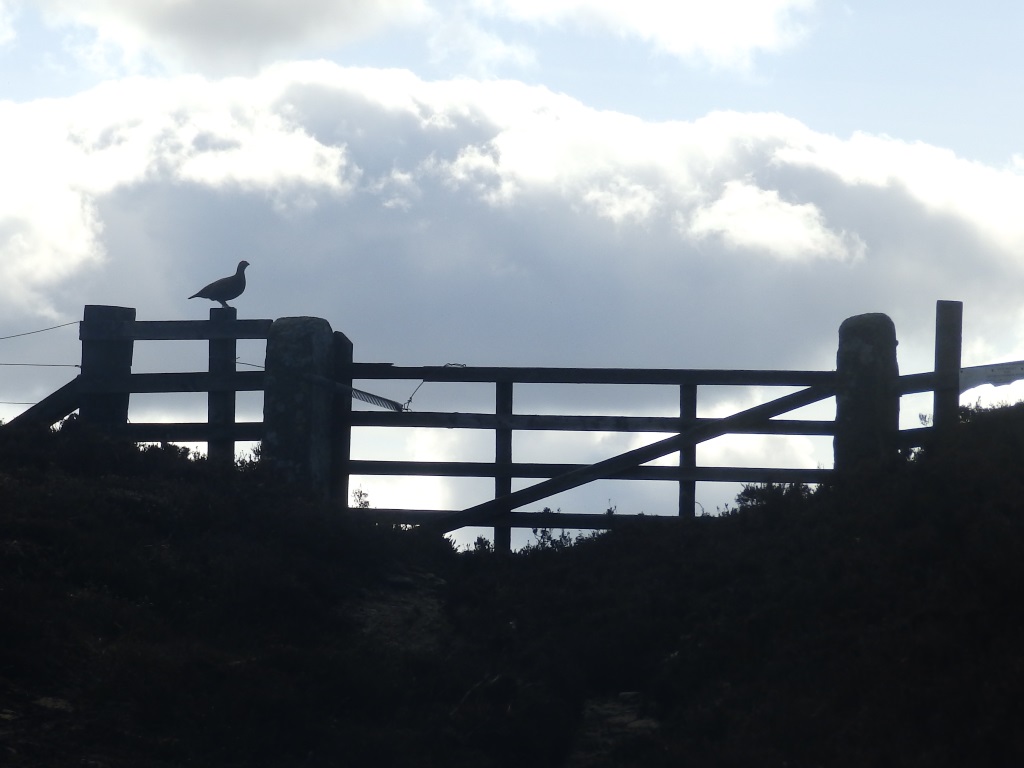
Show-off!
The trig point at Bolt's Law, not unreasonably, marks the highest point in these immediate parts and, as a bonus, there's also a 'currick', which is what they call a cairn in the North Pennines.
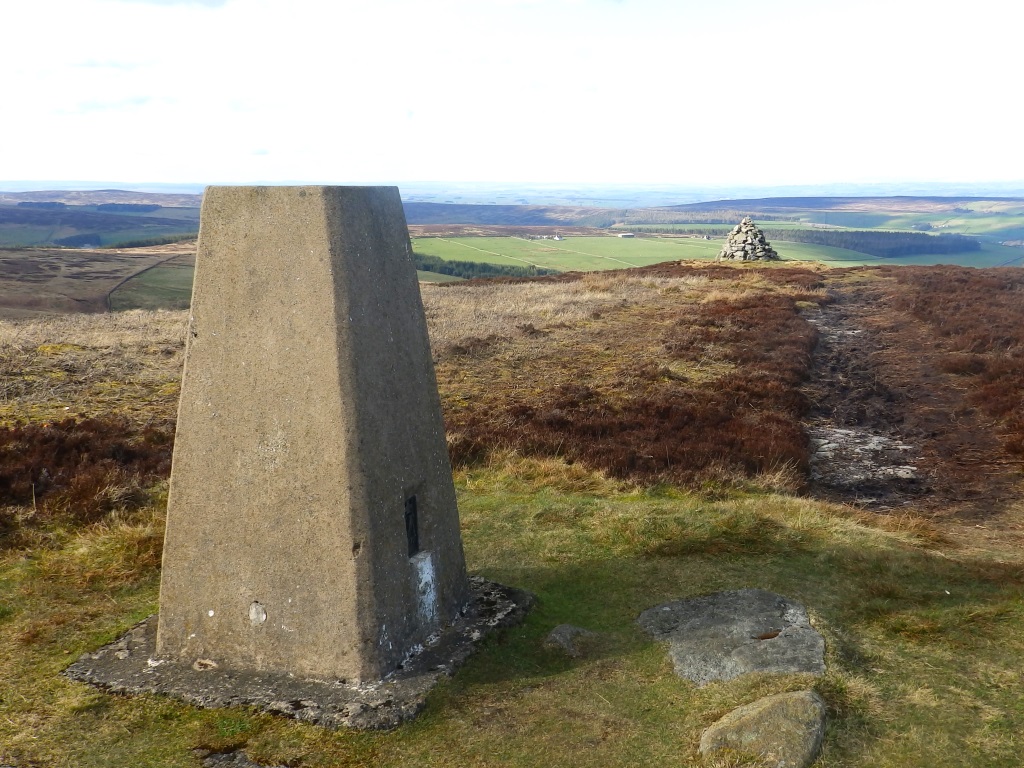
Since this is the highest point, it's all downhill from now, although that last, lost half-hour might have you thinking the day had already started to go that way.
Downhill through the Newbiggin and Hunstanworth Estate, actually, despite their intentions not necessarily being so environmentally friendly?
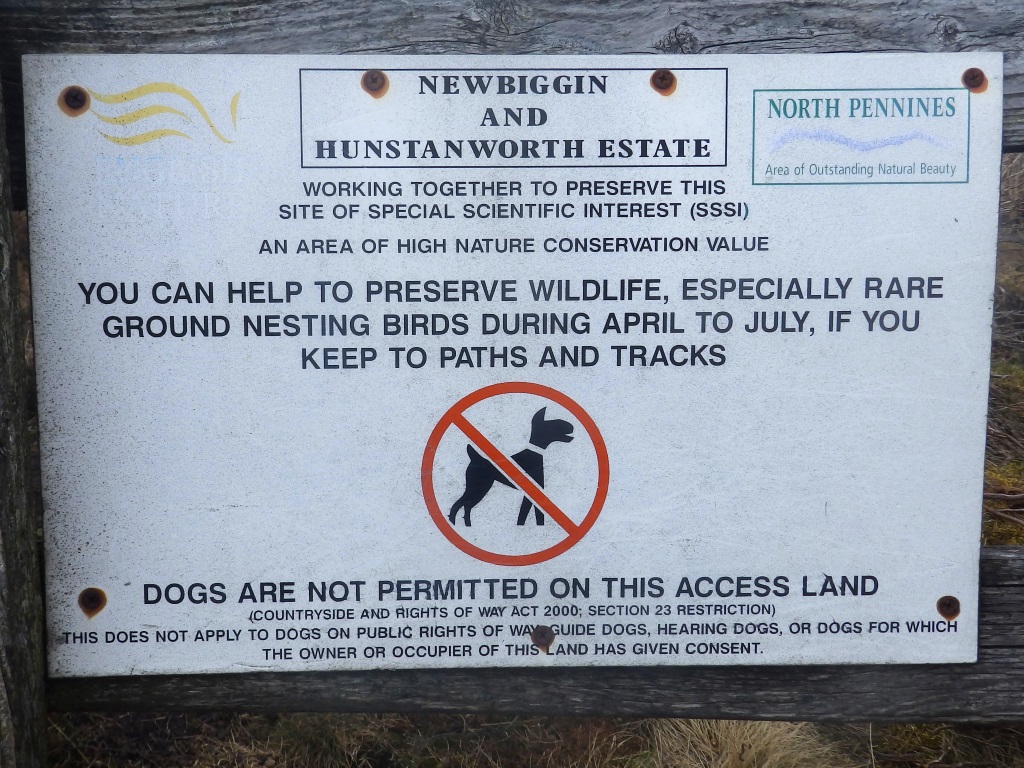
Ground nesting birds? That'll be the grouse, which aren't that rare, they just don't want them disturbed so toffs can keep paying a premium to take pot shots at the little breeders later in the year.
Pheasants were introduced to the UK around 1,000 years ago, which in evolutionary terms is the blink of a finger. The invention of the internal combustion engine is even more recent so it's excusable they haven't evolved, just yet, to realise bouncing off cars isn't a good survival strategy.
Red grouse, on the other hand, are native to the UK so they should have had a head start in evolving to not waiting until you're three foot away before panicking and whirring off in a right flap. They're pretty but stupid things and will have you very nearly siding with the toffs.
Another couple of miles of moorland to navigate, but these tracks are easy to follow. You'll meet a minor road coming up out of Rookhope, which will make for an exhilarating drive north on your way back home later.
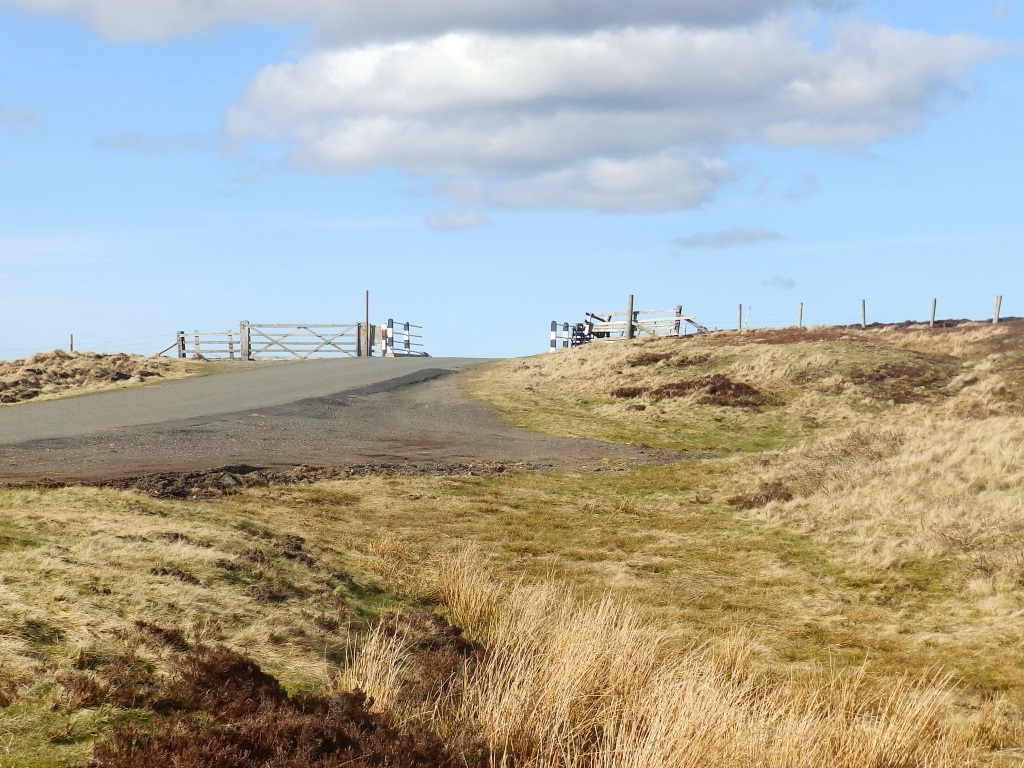
No other option than to walk along it, although you can cut off a corner where lapwings and curlews are heard but not seen. A track past Bankfoot Cottage brings you just about back to the start at the arch.
Meanwhile, back in Rookhope, a rewarding pint. Look, there's that lad from before... 'Alright mate, remember you asked earlier if Bob was lost? What I meant to say was...'